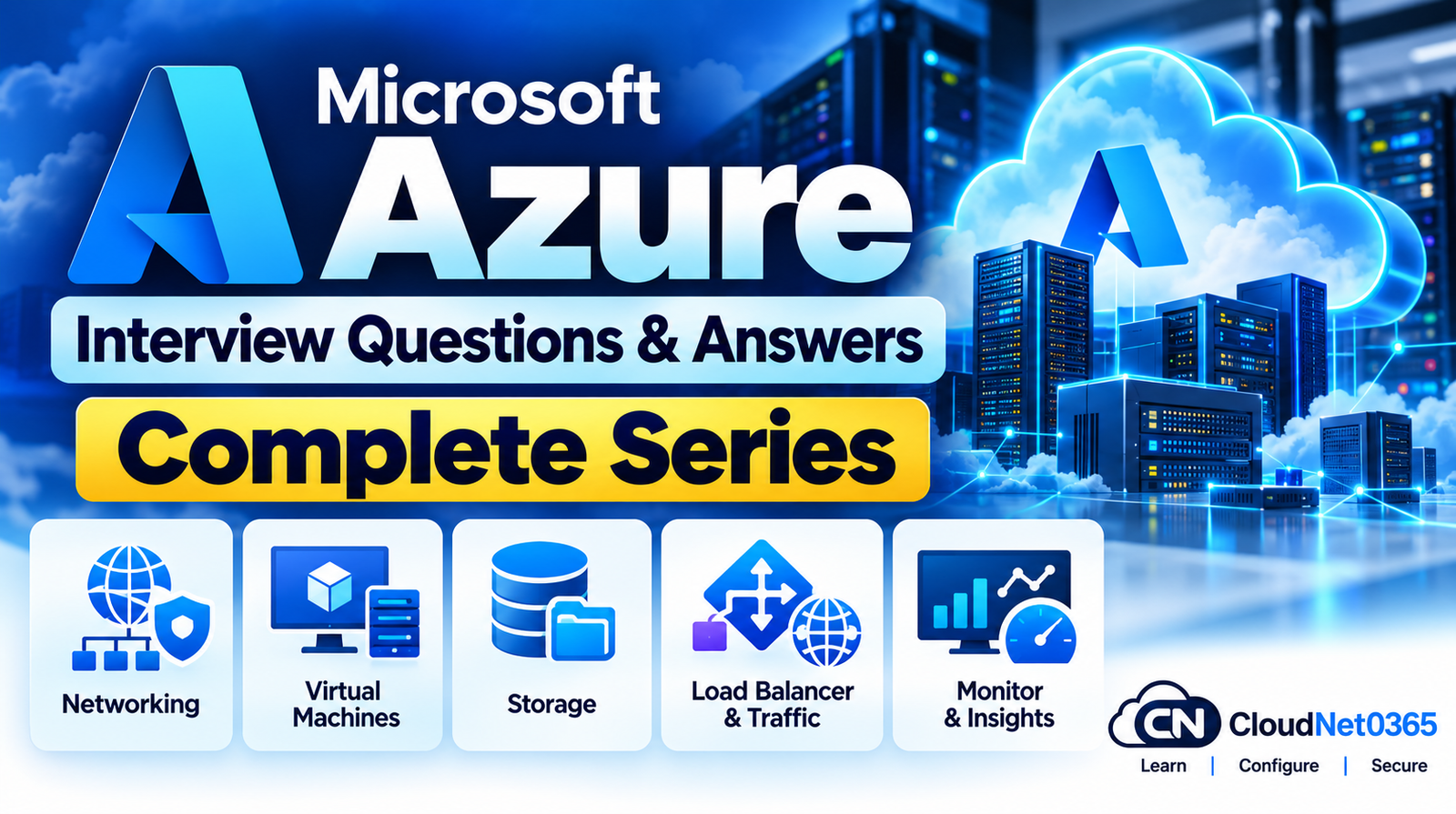
Preparing for a Microsoft Azure interview requires more than memorizing Azure service definitions. A strong Azure interview preparation should cover infrastructure, networking, compute, storage, traffic management, monitoring and real-world troubleshooting.
This Microsoft Azure Interview Questions & Answers – Complete Series is designed for System Administrators, Azure Administrators, Infrastructure Engineers, Cloud Engineers and IT professionals preparing for Azure-focused interviews.
The series progresses from Azure networking fundamentals to compute, storage, application delivery and monitoring.
What does this Azure Interview Questions & Answers Series Covers ?
This series covers:
- Azure Virtual Networks (VNets)
- Subnets
- Network Security Groups (NSGs)
- Azure connectivity
- Azure Virtual Machines
- Azure compute
- Managed disks
- VM availability
- Azure Storage
- Blob Storage
- Azure Files
- Storage redundancy
- Azure Load Balancer
- Application Gateway
- Web Application Firewall
- Azure Front Door
- Traffic Manager
- Azure Monitor
- Log Analytics
- Application Insights
- Azure Alerts
- Azure Advisor
- Azure troubleshooting
- Real-world Azure scenarios
Microsoft Azure Interview Questions – Complete Series
Part 1: Azure Networking Fundamentals, VNets, Subnets, NSGs & Connectivity
Start with the networking fundamentals required to understand Azure infrastructure.
Topics include:
- Azure Virtual Networks
- Subnets
- Network addressing
- Network Security Groups
- Azure networking
- VNet connectivity
- Network interfaces
- Routing
- Network security
- Connectivity troubleshooting
- Real-world Azure networking scenarios
Part 2: Azure Virtual Machines, Compute, Disks & Availability
Part 2 focuses on Azure compute and Virtual Machine administration.
Topics include:
- Azure Virtual Machines
- VM sizes
- Compute concepts
- Managed disks
- OS and data disks
- Disk types
- VM networking
- Availability
- Availability Sets
- Availability Zones
- VM troubleshooting
- Real-world Azure VM scenarios
Read Part 2:
Microsoft Azure Interview Questions – Part 2: Azure Virtual Machines, Compute, Disks & Availability
Part 3: Azure Storage, Blob Storage, Azure Files, Redundancy & Troubleshooting
Part 3 covers Azure Storage and the storage services commonly used in Azure environments.
Topics include:
- Azure Storage accounts
- Blob Storage
- Azure Files
- Storage redundancy
- LRS
- ZRS
- GRS
- GZRS
- Storage access
- Storage security
- Storage troubleshooting
- Real-world storage scenarios
Part 4: Load Balancer, Application Gateway, Front Door & Traffic Manager
Part 4 focuses on Azure traffic distribution and application delivery.
Topics include:
- Azure Load Balancer
- Layer 4 load balancing
- Application Gateway
- Layer 7 routing
- Web Application Firewall
- Path-based routing
- Host-based routing
- Azure Front Door
- Global application delivery
- Traffic Manager
- DNS-based traffic routing
- Health probes
- Backend health
- Traffic distribution
- Real-world troubleshooting scenarios
Part 5: Azure Monitor, Log Analytics, Application Insights, Alerts & Advisor
Part 5 focuses on Azure monitoring, observability and proactive infrastructure management.
Topics include:
- Azure Monitor
- Log Analytics
- Azure Monitor Logs
- Application Insights
- Metrics
- Logs
- Alerts
- Alert rules
- Monitoring resources
- Application monitoring
- Performance monitoring
- Azure Advisor
- Proactive recommendations
- Monitoring and troubleshooting scenarios
Recommended Study Order
For the best Azure interview preparation, follow the series in this order:
Part 1 → Part 2 → Part 3 → Part 4 → Part 5
The progression is intentional:
Networking → Compute → Storage → Traffic Management → Monitoring & Observability
This gives you a strong infrastructure foundation before moving into monitoring and troubleshooting.
Who Should Read This Series?
This Azure interview series is useful for:
- System Administrators
- Azure Administrators
- Cloud Engineers
- Infrastructure Engineers
- IT Support Engineers
- Network Engineers
- Windows Server Administrators moving to Azure
- Cloud Support Engineers
- IT Infrastructure professionals
- Candidates preparing for Azure interviews
How to Prepare for an Azure Interview
Do not focus only on memorizing Azure service definitions.
For each service, understand:
What it is → Why it is used → How it works → How it is configured → How it is monitored → How it is troubleshot
For scenario-based questions, explain your troubleshooting process logically.
For example, if a Virtual Machine cannot be reached, consider the problem from multiple layers:
- VM state
- Network interface
- IP configuration
- NSG rules
- Routing
- Guest operating system firewall
- Application/service availability
- Port connectivity
This demonstrates practical troubleshooting ability rather than simple memorization.
Important Azure Interview Areas
Before attending an Azure infrastructure interview, make sure you are comfortable with:
- Azure VNets
- Subnets
- NSGs
- Azure routing
- Azure Virtual Machines
- Managed Disks
- Availability Sets
- Availability Zones
- Azure Storage
- Blob Storage
- Azure Files
- Storage redundancy
- Azure Load Balancer
- Application Gateway
- WAF
- Front Door
- Traffic Manager
- Azure Monitor
- Log Analytics
- Application Insights
- Alerts
- Azure Advisor
- Azure troubleshooting
- High availability
- Network connectivity
Azure Interview Troubleshooting Approach
For senior-level Azure interviews, use a structured troubleshooting approach:
Identify → Gather Evidence → Isolate → Test → Fix → Validate
Use the appropriate Azure tools and monitoring data instead of immediately changing configurations.
For example, when investigating an application problem, you may need to examine:
- Resource health
- Metrics
- Logs
- Activity logs
- Network connectivity
- Application behavior
- Alert history
- Application Insights telemetry
- Log Analytics data
The objective is to identify the actual failure point before applying a fix.
Azure Infrastructure and Monitoring
Azure services are interconnected.
A typical infrastructure environment may involve:
VNet → Subnet → NSG → NIC → VM → Storage → Application → Monitoring
Azure Monitor and related services then provide visibility into the health and performance of those resources.
Understanding this relationship is important for senior-level Azure interviews because many production incidents cross multiple Azure services.
Frequently Asked Questions
1. Is this Azure interview series suitable for System Administrators?
Yes. The series focuses on Azure infrastructure, networking, compute, storage, traffic management and monitoring topics relevant to System Administrator and Infrastructure Engineer roles.
2. Does this series cover Azure networking?
Yes. Part 1 covers Azure networking fundamentals, VNets, subnets, NSGs and connectivity.
3. Does this series cover Azure Virtual Machines?
Yes. Part 2 covers Azure Virtual Machines, compute, disks and availability.
4. Does this series cover Azure Storage?
Yes. Part 3 covers Azure Storage, Blob Storage, Azure Files, redundancy and troubleshooting.
5. Does this series cover Azure Load Balancer and Application Gateway?
Yes. Part 4 covers Load Balancer, Application Gateway, Front Door and Traffic Manager.
6. Does this series cover Azure monitoring?
Yes. Part 5 covers Azure Monitor, Log Analytics, Application Insights, Alerts and Azure Advisor.
7. Should I study the parts in order?
Yes. The recommended sequence is:
Part 1 → Part 2 → Part 3 → Part 4 → Part 5
Conclusion
The Microsoft Azure Interview Questions & Answers – Complete Series provides a structured path for preparing for Azure infrastructure and cloud administration interviews.
Start with Azure networking, progress through Virtual Machines and storage, then learn traffic management and application delivery, and finish with monitoring, observability and proactive troubleshooting.
The goal is not simply to memorize Azure services. You should understand how Azure services work together, how to monitor them and how to troubleshoot real-world infrastructure problems.
Start with Part 1 and work through the complete Azure interview series.